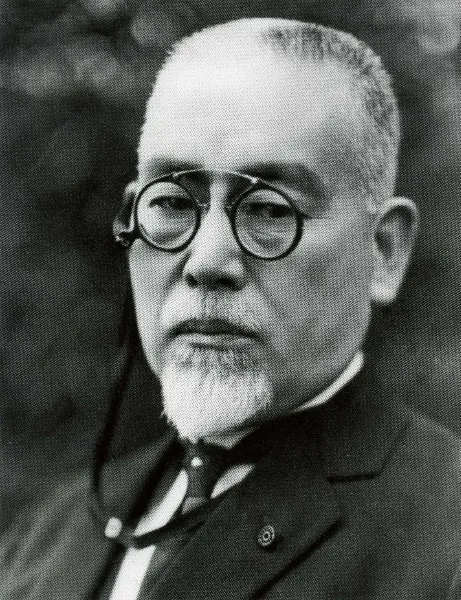
Deciding to renew the capital city of Tokyo in December 1920, Shimpei Goto became the mayor of the City of Tokyo. He demonstrated his outstanding insight in reforming the city government by completely overhauling its structure and advocating a new way of governing.
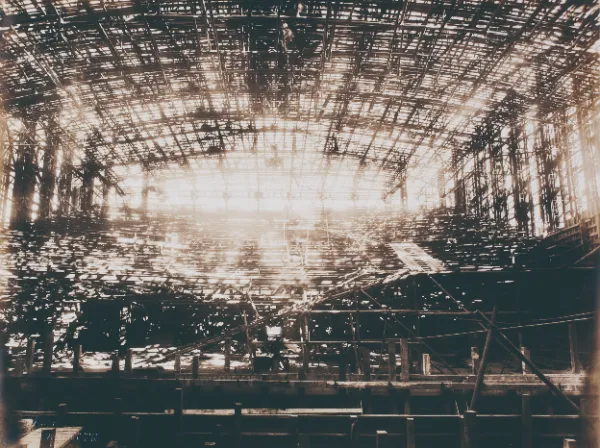
In 1921, he announced a plan to build a large capital city, known as the “800 million yen plan.” The plan included the construction of Hibiya Public Hall.
Hibiya Park was designed in 1901 as Japan’s first Western-style urban park, and the master plan included the construction of Hibiya Public Hall. The proposed construction site was where the park’s First Flower Garden is now located. However, that plan never materialized.
Mayor Goto revived the construction of the public hall, which had never been materialized, by including it in his own plan.
The plan reflects the desire to make the public hall the “light in the hearts of citizens in urban life.”
The “800 million yen plan” announced by Mayor Goto did not progress as expected because the state capacity could not support it.
Tokyo Institute for Municipal Research (TIMR) was established as a municipal research organization. Through this initiative, the Hibiya Public Hall construction plan was able to find its way to materialization.